Our History
Delaware Avenue Worship Site
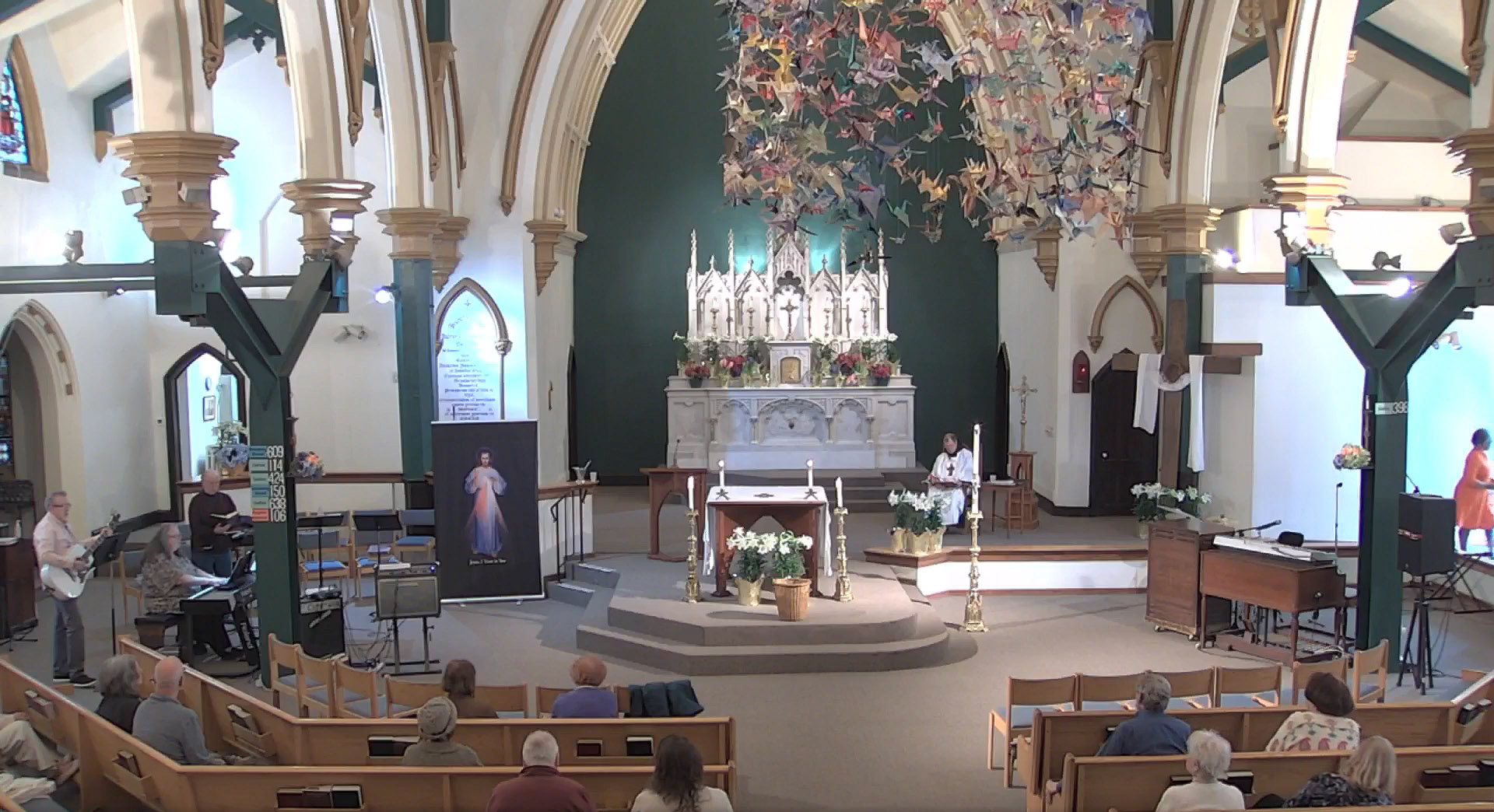
In 2010, the faith community of St. Francis of Assisi Parish formed when the parishes of St. James’ and St. John’s/St. Ann’s joined together in faith to form one united faith community which has blended together the rich spiritual and historical fabric of both parishes. The former St. John’s/St. Ann’s Parish became the South End worship site of St. Francis of Assisi, and the former St. James’ Parish became the Delaware Avenue worship site.
Dedicated on May 11, 1929, St. James’ Parish was founded to cater to the spiritual needs of the area’s new German, Irish and Italian settlers. Though the parish was not dedicated until the late 1920s, its history dates back to 1911. In 1911, members of the newly diverse community submitted a petition to Bishop Burke to establish a parish local to the community. In the years that followed, farmland was purchased and construction of St. James’ began. Rev. Patrick F. Scully, who was instrumental in the construction of the first chapel and overall growth of the parish in its early years, served as the first pastor of the newly formed parish. The First Mass was celebrated on October 22, 1913.
In the decades that followed, there were many priests who were instrumental in ensuring the growth of the St. James’ Parish community. Nearly fifteen years after the celebration of the first Mass, a new edifice, chapel and school building that could accommodate the budding population were constructed. Staffed by the Sisters of St. Joseph of Carandelet, St. James’ School catered to the academic needs of the area’s youth until its closing. To accommodate the school’s growth in its early years, the St. James’ Institute was built to house additional classrooms, music and audio-visual rooms and a library. In addition, renovations and restorations of the aging parish’s interior and exterior were overseen by leadership.
From the 1970s to the 2000s, parish leadership particularly oversaw the construction of the school’s needed gymnasium/auditorium and, creation of the School Board, Home-School Association and a plethora of parish societies, clubs and organizations including the St. James’ Food Pantry that were designed to encourage spiritual and physical development of all parishioners of all ages, and strengthen community outreach efforts.
Our History
South End Worship Site
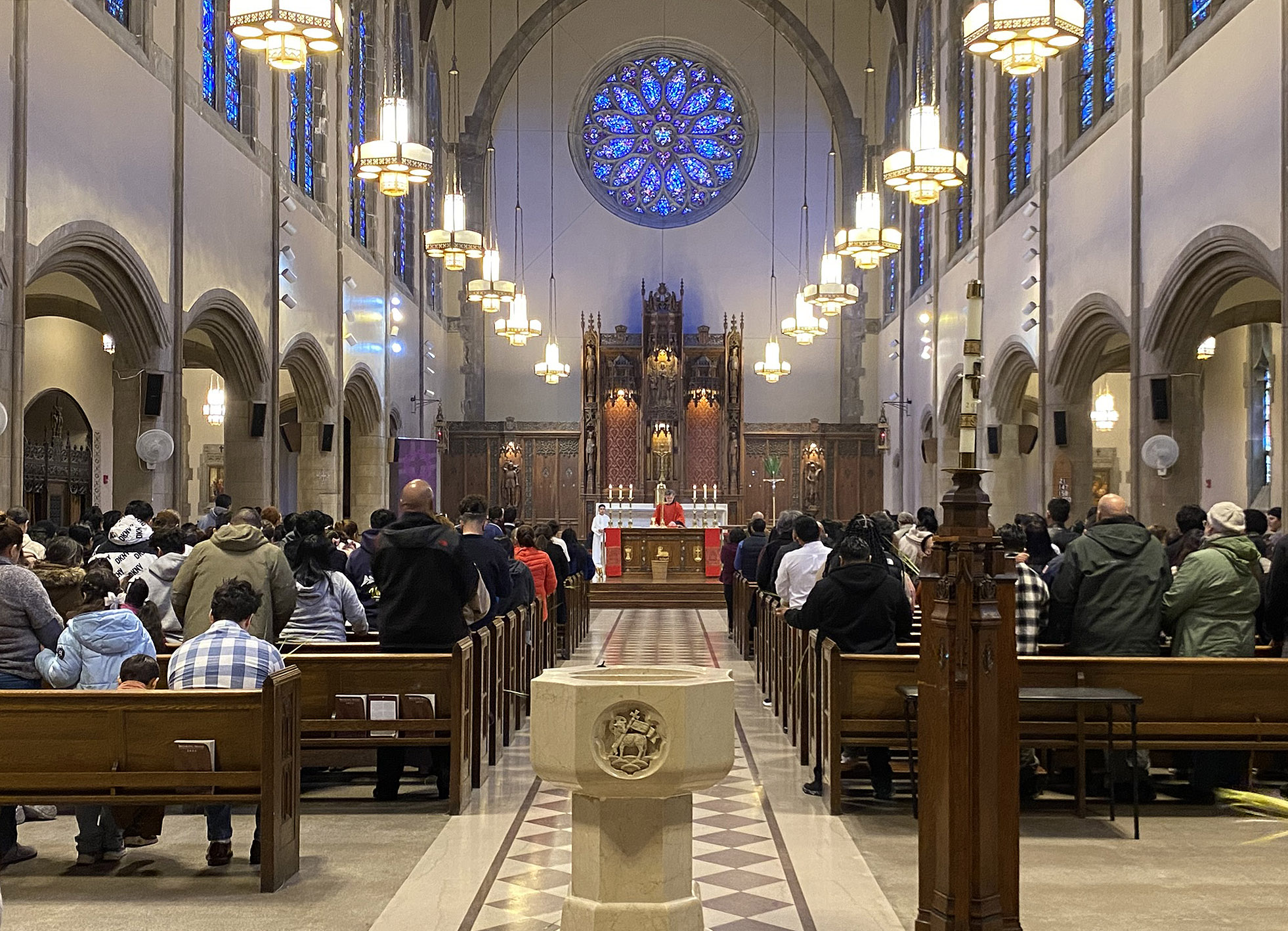
In 1978, after much thought and prayerful consideration, St. John’s Parish, which was found-ed in 1837, and St. Ann’s Parish, which was incorporated in 1867, merged to form St. John’s/St. Ann’s Parish under Fr. Thomas Hayes’ leadership to cater to the spiritual needs of Albany’s South End intentional faith community. Housed within the former St. Ann’s Parish and armed with a mission “to promote the Reign of God through Jesus Christ”, St. John’s/St. Ann’s Parish served as a shining example of living out the Christian faith in the immediate neighborhood.
In its early years, parish leadership focused on enhancing liturgical celebrations, developing unique outreach programs and crafting educational and Faith Formation courses and retreats designed to nourish and enable Catholic ministry. The St. John’s/St. Ann’s community created many committees (such as the Prayer, Education and Worship (PEW) Committee) and councils that worked tirelessly to encourage fellowship and ministry. As an example, Baptist hymnals were incorporated into the Music Ministry to facilitate a way for Black Catholics to feel more welcome to join their fellow parishioners in worship. The Baptist hymnals became an integral part of the Music Ministry and are still used today.
The former St. John’s Center, originally founded within the old grade school, was moved to the old firehouse on the corner of Fourth Avenue and Franklin Street to expand services and accommodate the needs of the growing neighborhood. In an effort to promote peace, parishioners crafted thousands of origami cranes. Those cranes still hang within the worship space to remind us of our call.